Everything You Need to Know About the Different Types of Door Handles (Lever Handle, Y/I-Shaped Handle, L-Shaped Handle)
Door handles are essential for the security and comfort of your home. However, it’s not always easy to navigate the various types of handles available, such as latch handles, Y/I-shaped keys, and L-shaped keys.
What are the different types of door handles?
What criteria should you consider when making your choice?
Here's everything you need to know about the topic!

What are the differences between latch handles, I/Y-shaped keys, and L-shaped keys?
Door handles come in several types, each suited to specific uses in your home.
Let's start with the latch handle. It is commonly used for interior doors that do not require a lock; it operates using a simple rotational mechanism that engages the door's latch.
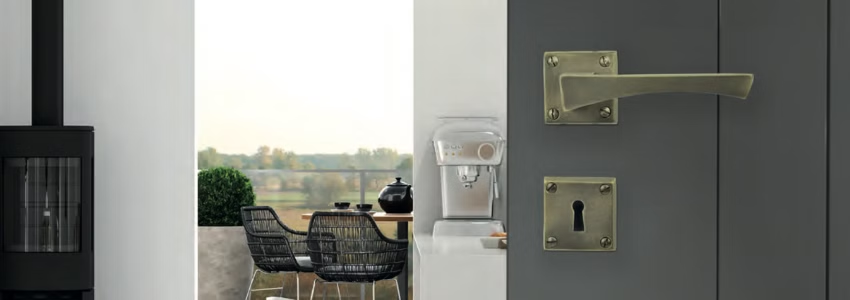
The L-key is typically used for doors that require a simple locking mechanism. These handles are often equipped with a keyhole to accommodate the key.
For its part, the Y-key—also known as the i-key—is often used for front doors or doors requiring enhanced security. This type of lock is more complex and offers a higher level of protection, making it particularly well-suited for locations where security is a priority.
Both terms, Y and i, refer to the same type of key! This type of door handle is commonly found in bedrooms or offices where basic security is sufficient.

What level of security does each type of lock and its corresponding handle provide?
The level of security provided by each type of lock varies depending on its mechanism and intended use. The door handle you select should be compatible with the locking mechanism you choose.
The latch handle without a key escutcheon, for example, offers a minimal level of security. It is therefore ideal for interior doors that do not require locking, such as those in living rooms, hallways, or dining rooms, but not for rooms that need to be secured or at least lockable.
For bedrooms and bathrooms, where a certain level of privacy and security is desired, the L-key is much more appropriate. This type of door handle allows for simple locking—enough to prevent unwanted entry—while still being easy to unlock from the inside in case of an emergency. It is a common and practical solution for these rooms in the home.
The Y-key, or i-key, offers the highest level of security among the three types mentioned above. It is often found on front doors and other entry points that require enhanced protection against intrusion. The locking mechanisms for this type of door handle are therefore more complex and robust, ensuring maximum security.
The key point to remember is that each type of door handle meets specific needs in terms of functionality and security:
- a latch without a key escutcheon for non-lockable interior doors,
- the handle with an L-shaped key escutcheon for doors requiring a simple locking mechanism,
- and a handle with an I- or Y-shaped key escutcheon for enhanced security.

Steps to Follow for Installation
Installing an interior door handle can be easy if you follow the right steps:
- Preparing Tools and Materials: Gather a screwdriver, a drill, screws, a pencil, a level, and the interior door handle you’re going to install, and don’t forget to check that the new handle fits the door’s dimensions;
- Marking the holes: Position the plate or handle rosette on the door and carefully mark the locations of the screws;
- Drilling the holes: Next, drill the holes at the marked locations;
- Attaching the plate or rosette: Securely fasten the plate or rosette with the appropriate screws;
- Installing the handle: All you have to do is insert the handle into the mechanism and tighten the screws to secure it in place—and you're all set.
Here are a few care tips to help keep your handles in excellent condition:
- Regular cleaning: Wipe down the handles with a soft cloth and mild detergent to prevent dirt buildup;
- Lubrication: Be sure to apply a suitable lubricant to the lock’s mechanisms to ensure smooth operation over time;
- Component Inspection: Finally, periodically check the condition of the handles and mechanisms to detect any wear or damage early on.

How important is the choice of door handle to the overall aesthetic of your home?
A door handle does more than just serve a practical purpose; it also plays a significant decorative role. It can complement the style of the room, enhancing the elegance of a classic interior or adding a modern, minimalist touch to a contemporary design.
The material of the handle is the primary factor influencing its appearance. Metal handles—such as brass, stainless steel, or chrome—add a touch of sophistication and durability.
When it comes to available finishes, it’s important to note that they are just as important as the base materials. Why? Simply because polished or satin finishes create a chic and elegant atmosphere, while textured finishes are perfect if you’re looking for a specific visual effect. The choice of finish can therefore harmonize with or contrast against other elements in the room, such as furniture, lighting fixtures, or even wall colors.
In fact, it is precisely by taking these many aspects into account that you will be able to decide on the look you want for your space, especially when you’re wondering,“Which door handle should I choose?” A well-chosen handle can transform an ordinary door into an attractive design element, contributing to the harmony and beauty of your interior.
