
Table of Contents:
- How do you choose a handle based on its dimensions?
- How important are the dimensions of a doorknob?
- How can you accurately measure the distance between the square and the lock (the center-to-center distance)?
- What are the different types of door handles, and what are their dimensions?
- How do you choose a door handle that looks good and is the right size?
- 5 Tips for Properly Aligning a Door Handle
How do you choose a handle based on its dimensions?
Choosing the right size for a door handle may seem like a minor detail, but it can make all the difference in terms of comfort, aesthetics, and even safety. A handle that’s the wrong size can be uncomfortable to use and cause problems with the door’s functionality.
In this article, we’ll explain the key factors you need to consider when choosing the optimal size for your door handle, to ensure that your choice is both practical and functional.
Here's everything you need to know about the topic!
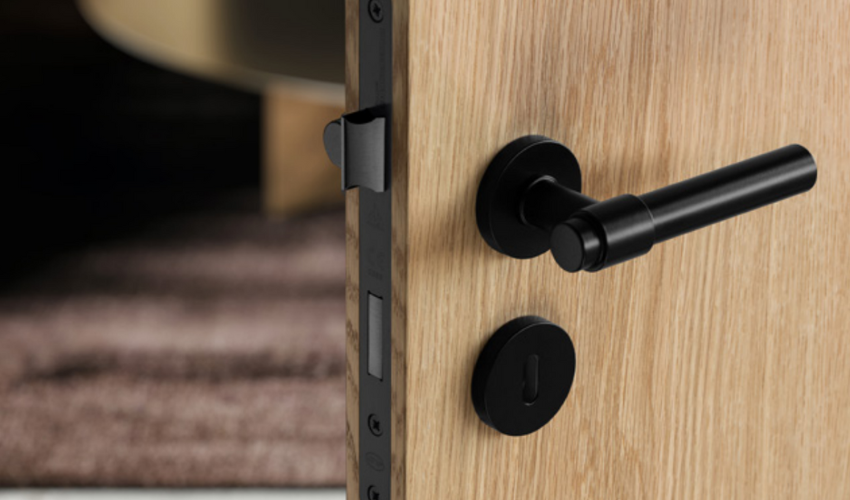
How important are the dimensions of a doorknob?
Understanding the importance of the dimensions of a door handle is essential to ensuring it works properly and provides you with comfort in your daily life.
First of all, the handle should be the right size for your hands to ensure a comfortable and secure grip. A handle that is too small may be difficult to grip, while one that is too large may be uncomfortable to use.
The height at which the handle is mounted should also be adapted to the height of the home’s occupants, especially for people with limited mobility. A handle that is positioned too high or too low can make it difficult, or even impossible, to open the door.
Finally, the distance between the handle and the edge of the door—known asthe “projection”—must be chosen based on the type of door and its thickness. This helps prevent any friction or jamming when opening and closing the door.
The key point to remember is that the dimensions of a doorknob play a fundamental role in its day-to-day use—and therefore in your everyday comfort. However, you’ll be limited by the lock installed on your door, since it determines how the doorknob is installed. Be sure to have the lock installed exactly where you want to install your door handle.
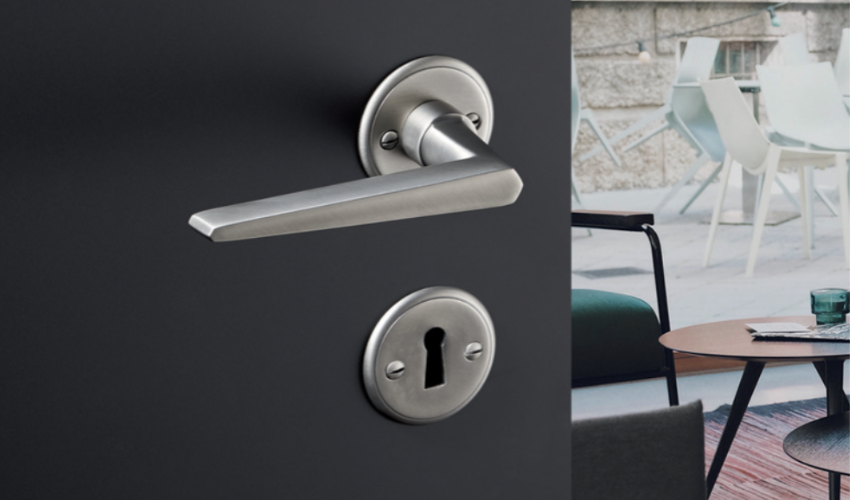
How can you accurately measure the distance between the square and the lock (the center-to-center distance)?
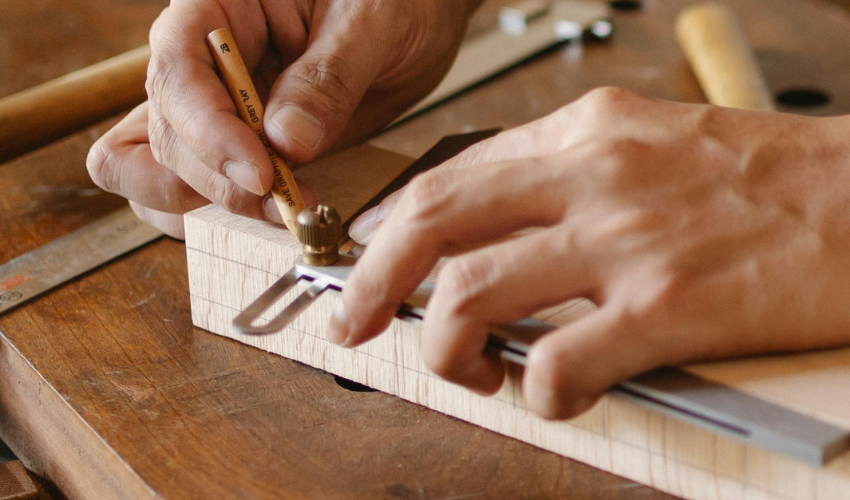
To accurately measure the distance between the square and the lock, you'll need a tape measure or a ruler, as well as a pencil to mark the measurement points.
Here are the steps to follow:
- Locating the holes: First, locate the holes for the square (where you will insert the handle) and the lock (where you will insert your key);
- Measuring the center-to-center distance: The center-to-center distance is the distance between the centers of the two holes in question (the square hole and the lock hole). To measure this distance accurately, place the end of the tape measure or ruler at the center of the first hole and extend it to the center of the second hole. Be sure to check that the tape measure or ruler is straight to ensure an accurate measurement;
- Measuring the distance between the door frame and the door jamb:
To ensure that the product you select is suitable for your doors, you’ll need to measure the distance between the square where you’ll mount the door handle and the door frame. Why? To ensure that the door handle rosette and keyholes can be mounted without preventing the door from closing.
- Recording the Measurement: Once you have taken the measurements, write them down so you can refer to them when choosing your new doorknob. It’s also a good idea to take this measurement at several points to ensure its accuracy, since doors can sometimes vary slightly in size;
Please feel free to bring your measurements and photos to the store so we can help you make the right technical choice based on your specific needs.
- Checking the mounting square: In addition to the center-to-center distance, you may also need to measure the mounting square, which is the size of the square hole into which the handle mechanism fits (it is most commonly 6, 7, or 8). This measurement is generally standard depending on the type of lock you have, but it’s best to check it to make sure it matches the new handle you want to install.
If needed, we have all the necessary adapters to help you install the handles you've chosen.
With these few simple steps, we can help you choose a new doorknob that will fit your door perfectly!
What are the different types of door handles, and what are their dimensions?
When it comes to understanding the dimensions of door handles, you need to start by knowing the standard dimensions of an interior door. Generally, French doors have a standard thickness of 4 cm. However, this thickness may vary depending on the door’s origin (standard or custom-made), date of manufacture, and country of origin.
Here is a summary of the different types of door handles and their dimensions:
- Flush-mounted handles: These handles are mounted flush with the door’s thickness, offering a sleek, modern look. The key dimension to consider is the recess depth, as specified in the technical data sheet, which depends on the door’s thickness. Standard doors are generally 3.5 to 4 centimeters thick, but this measurement may vary. We recommend that you do not pre-drill holes until you have the product in hand to ensure a proper fit;
- Flush-mounted handles for sliding doors: Sliding doors require special flush-mounted handles. These handles consist of recessed cup handles mounted on the face of the door and a pull tab on the side of the door to make it easier to grip when the door is retracted into the wall;
- Door knobs designed for antique doors: Antique doors are most often equipped with surface-mounted locks that are designed to accommodate a door knob (round or oval in shape).
The door knob is designed for this type of lock to make it easier to use and preserve the original appearance. Most often, they come with a 6-square spindle, which is included with the product.
- Lever-style door handles (also known as lever knobs or lever handles): Finally, lever-style door handles are among the most common and offer an easy grip. They are perfectly suited for modern doors with a lock recessed into the door (hidden lock).
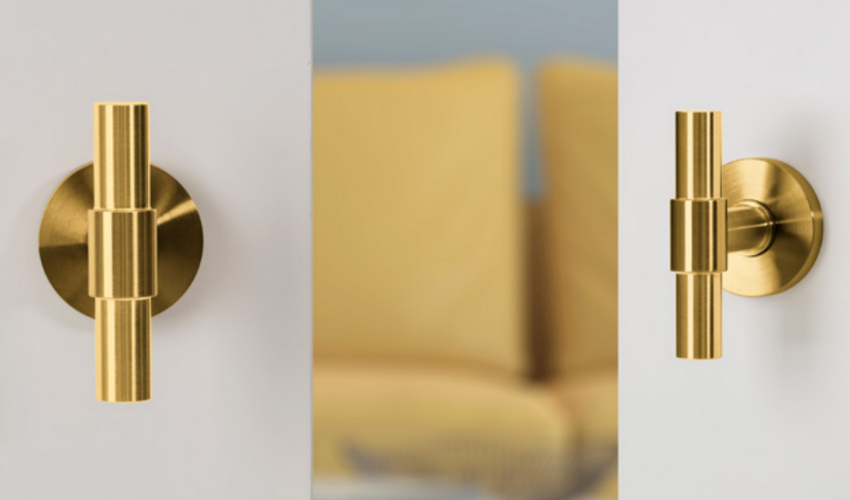
How do you choose a door handle that looks good and is the right size?
When choosing a door handle, aesthetics are key. A well-chosen handle can not only complement the style of your door and your interior, but also enhance the overall look of your living space.
Step 1: Consider the proportions! A handle that’s too small can look lost on a large door, while one that’s too large can seem overwhelming on a standard-sized door. So, be sure to choose a handle whose dimensions complement those of your door, taking into account its height, width, depth, and, of course, its overall style.
When it comes to style, we recommend choosing a doorknob that complements your interior design. For example, if you have a modern interior, opt for doorknobs with a sleek, contemporary design. Conversely, for a more traditional style, doorknobs featuring classic, Art Deco, or wrought-iron details will be perfect.
Don't forget to consider the other elements of your interior design, such as lighting fixtures, furniture, and accessories! Make sure the doorknob you choose complements these elements to create a cohesive look throughout the room, especially in terms of the finish / color of the door handle.
Choosing an attractive door handle that’s the right size therefore means striking a balance between style, size, and the overall design of your interior. This is especially important to avoid having to remove a door handle later on that clashes with your decor!
5 Tips for Properly Aligning a Door Handle
Here are 5 practical tips for properly installing a door handle and avoiding unpleasant surprises:
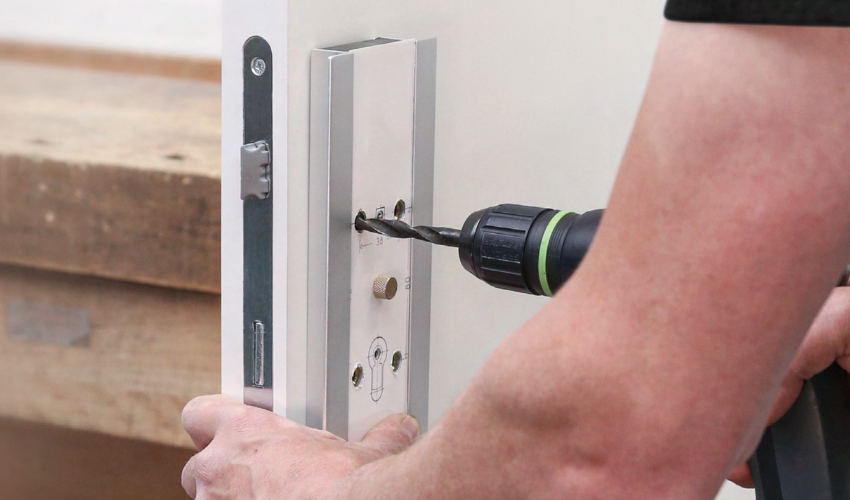
- Tip #1: Measure and mark accurately. Before drilling holes in the door, carefully measure and mark the locations of the handle mounting holes. Use a level to make sure the marks are aligned horizontally and vertically.
- Tip #2: Consider using a drilling template. To ensure perfect alignment, use a drilling template if one was included in the box with your product. This will help you drill holes that are precisely spaced and aligned.
- Tip #3: Check the installation direction of any springs. Some handles come with return springs to help the locks support the weight of the handles. These springs usually have a specific direction (L for Left and R for Right). Make sure the springs are installed in the correct direction to avoid any disappointment once the handle is secured. The handle should be perfectly horizontal once installed.
- Tip #4: Make sure the set screw is properly secured. The set screw must be inserted into the slotted part of the square to ensure it is held at the correct distance and, therefore, securely fastened to the handle. Otherwise, the handle will not be properly secured and may slip off the square and fall right out of your hands.
- Tip #5: Check that the handle works properly. Before securing the handle in place, make sure it works correctly by testing whether it opens and closes properly. This will allow you to easily make any necessary adjustments before completing the installation.
- Tip #6: Consider the type of door. The placement of the handle may vary slightly depending on the type of door. For example, on a front door, the handle is generally placed higher than on an interior door. Be sure to take these differences into account during installation.